Back to Strangepedia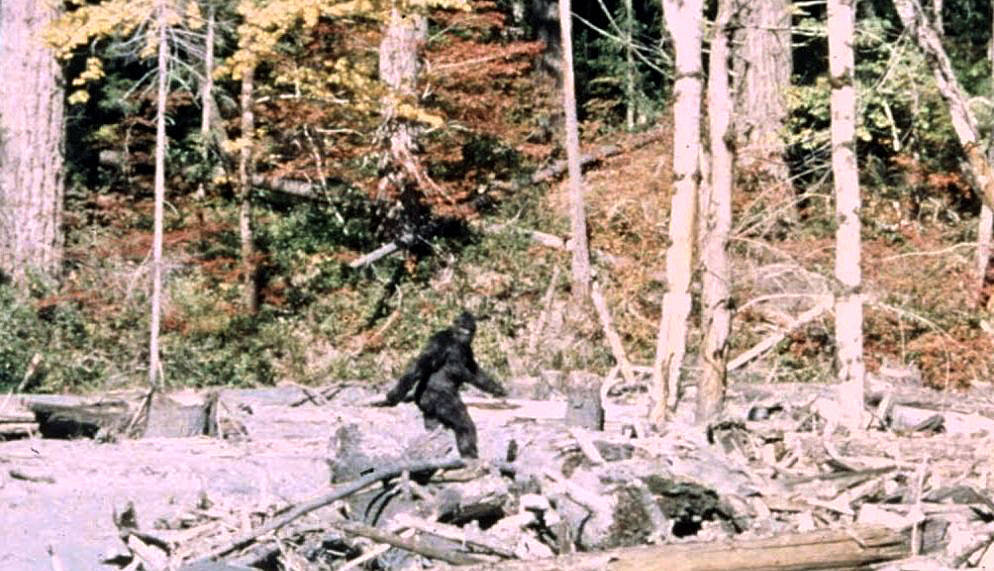
View all Cryptid sightings →
🦶
A large bipedal primate reported throughout North America, particularly the Pacific Northwest. Thousands of sightings documented since the 19th century. Physical evidence includes trackways with dermal ridges, hair samples, audio recordings, and the Patterson-Gimlin film.
History & Background
Indigenous peoples of the Pacific Northwest have known Bigfoot — under names including Sasquatch, Skookum, and Seeahtik — for centuries. European settlers began recording encounters in the mid-1800s. The modern phenomenon was sparked by a 1958 newspaper article about enormous footprints found at a Humboldt County, California logging site.
The Patterson-Gimlin film (1967) remains the most scrutinised piece of evidence for any cryptid: 59 seconds of footage showing a large, bipedal, hair-covered creature walking alongside Bluff Creek, California. Decades of analysis — including by Hollywood special effects studios — have failed to prove it a hoax. The creature's gait, mass, and muscle movement have been studied by biomechanics experts who found no evidence of a suit.
The BFRO (Bigfoot Field Researchers Organization) has catalogued over 5,000 reports across North America. Trackway discoveries have produced casts showing dermal ridges — fingerprint-like skin detail that would be nearly impossible to fake and that match no known North American primate.
Reported Characteristics
- ▸7–10 feet tall, estimated 500–800 pounds
- ▸Covered in dark brown, black, or reddish-brown hair
- ▸Bipedal gait with mid-tarsal break unlike human stride
- ▸Shoulders disproportionately wide; little or no visible neck
- ▸Flat, human-like face with pronounced brow ridge
- ▸Footprints 15–20 inches long, showing dermal ridges
- ▸Produces tree knocking, whoops, screams, and infrasound
Notable Cases
1967Bluff Creek, CA
The Patterson-Gimlin Film
On October 20, 1967, Roger Patterson and Bob Gimlin were riding horses along Bluff Creek in northern California when they rounded a bend and encountered a large, hair-covered, bipedal creature at the edge of the creek. Patterson grabbed his 16mm camera and ran toward it, filming approximately 59 seconds of footage before the creature disappeared into the trees. The result is the most scrutinised piece of cryptozoological evidence in history.
The film shows a large, female-featured, hair-covered biped with a pronounced sagittal crest, extremely wide shoulders, and a distinctive pendulous gait unlike any known bipedal primate, including humans. Biomechanics expert Dr. D.W. Grieve of the Royal Free Hospital analysed the gait and found that the stride, cadence, and mechanics were consistent with a very large primate but inconsistent with a human in a suit — a human walking at that stride length would need to walk significantly faster. Dr. Jeff Meldrum of Idaho State University has noted that the muscle and tendon flexion visible in the film would be impossible to replicate in a costume.
Multiple Hollywood special effects companies — including the crew of "Planet of the Apes" — have been challenged to replicate the suit. None have produced a costume that replicates the visible anatomy, muscle movement, and hair dynamics at that scale. In 2002, a man named Bob Heironimus claimed to have worn a suit for the film, but was unable to identify the suit or explain where it went, and his description of the shooting location was inconsistent with the documented site.
Patterson died of Hodgkin's lymphoma in 1972, unable to further elaborate on the footage. Gimlin, still alive as of 2024, has never changed his account. Without a body or additional footage, the film cannot be definitively proven or disproven — which is precisely what makes it the enduring benchmark of the field.
2000Skookum Meadows, WA
The Skookum Cast
In September 2000, a BFRO expedition to Skookum Meadow in the Gifford Pinchot National Forest in Washington State placed bait — fruit — in a muddy clearing and set up audio and video monitoring equipment. The following morning, the team discovered a large impression in the soft mud near where the bait had been partially consumed.
The impression was unlike a footprint. It showed the lateral side of a large foot including the heel, the outer edge of an apparent calf, the imprint of a forearm, and what appeared to be the impression of a large buttock. The interpretation was that a large primate had sat or crouched at the edge of the mud to reach the bait without committing its full weight to the muddy surface — a behaviour consistent with a cautious large primate.
The cast was taken to the Smithsonian and examined by multiple primatologists, including Dr. Jeff Meldrum of Idaho State University and Dr. Grover Krantz of Washington State University. Both found that the impression was consistent with a large primate but inconsistent with a human in terms of scale, weight distribution, and dermal ridge characteristics in the heel area. The cast was also examined by the Idaho Museum of Natural History, which released a formal statement that the impression could not have been made by a human.
Skeptics have proposed that the impression was made by known animals — a bear, an elk — in a combined sequence. Meldrum has addressed each proposed explanation in published academic writing, finding none of them consistent with the pattern and detail of the full impression. The Skookum Cast remains on display at the BFRO and is considered the most anatomically specific piece of physical Bigfoot evidence ever documented.
1994Sierra Nevada, CA
The Sierra Sounds
Beginning in 1994, researchers Al Berry and Ron Morehead made a series of recordings in a remote Sierra Nevada wilderness area at elevations above 9,000 feet after receiving consistent reports from hunters of Bigfoot activity. Over several seasons, the two men recorded extensive vocalisations from the surrounding forest during nighttime encounters that they described as terrifying and unlike anything they had heard before.
The recordings — known as the "Sierra Sounds" — were analysed by Professor R. Lynn Kirlin of the University of Wyoming's electrical engineering department and linguist Scott Nelson of the US Navy's Defense Language Institute. Kirlin's acoustic analysis found that the vocalisations contained frequency components, amplitude patterns, and formant structures inconsistent with any known North American animal — including humans performing vocal manipulation or using electronic alteration. The recordings showed apparent vocal tract characteristics of a substantially larger laryngeal anatomy than any known primate in North America.
Nelson's linguistic analysis found what he described as evidence of grammar and syntax within the vocalisations — a structured pattern that suggested linguistic organisation rather than random animal sounds. He published a paper suggesting the recordings captured a form of language, though this interpretation is contested.
The recordings have been widely circulated in the cryptozoological research community and have been submitted to multiple independent audio analysis teams. No team has been able to identify the source as any known animal. Morehead has also published a cast of a footprint from the same location with dermal ridges consistent with other documented Bigfoot trackways. The Sierra Sounds remain the most technically analysed audio evidence in the field.
Documented Evidence
Frame 352 of the Patterson-Gimlin film, filmed October 20, 1967 at Bluff Creek, California.
Credit: Roger Patterson / Fair use
View sourceLeading Theories
- 1.Surviving population of Gigantopithecus blacki — an Asian great ape thought extinct for 100,000 years
- 2.Undiscovered great ape species native to North America
- 3.Interdimensional being — explaining the absence of remains
- 4.Cultural memory of a real extinct species maintained by indigenous tradition
- 5.Misidentification of bears, particularly mangy black bears walking upright
Related Entries
Know something we missed?
Strangepedia is maintained by the Project Strange team. If you have a correction, additional case, or new information to add, send us a suggestion and we'll review it.
Suggest an edit🐾 Community Reports
521
🐾 Bigfoot / Sasquatch📋 Sighting Report
Bipedal creature, 8-9 feet tall, crossed the logging road 30 feet in front of my truck
I work timber and have been in these woods for 22 years. Whatever I saw Tuesday morning was not a bear. It crossed the road upright, never broke stride, covered about 18 feet in three steps. Dark reddish-brown, heavily built through the shoulders. The head sat directly on the shoulders with no visible neck. My dog — who barks at everything — pressed herself flat against the seat and didn't make a sound. The road was muddy; I stopped and found a track 16 inches long with a clear mid-tarsal break. I made a plaster cast. This is the third encounter I've had in this drainage over 15 years but this was by far the closest.
756
🖤 Mothman📋 Sighting Report
Winged creature with 15-foot wingspan and red eyes circling my car on the highway
I know how this sounds. I was on I-77 near Point Pleasant around 9 PM. A massive dark shape began circling low over my car — I could see its wingspan blocking out streetlights as it passed. Humanoid shape, no feathers, dark leathery wings. But the eyes were what I can't shake: two bright red points that seemed to glow from inside. It kept pace with my car for almost two miles before banking away toward the river. I'm not from here but a local mechanic at the gas station I stopped at immediately said "you saw the Mothman, didn't you." I didn't know what that was at the time. Now I've done the reading. I believe him.
634
🌊 Sea Creature📋 Sighting Report
Enormous unidentified creature photographed in Loch Ness
We were kayaking near Urquhart Castle when a large hump surfaced about 40 metres ahead. I got three photos before it submerged. The shape does not match any known animal.